Virtual Router Redundancy Protocol (VRRP) and Hot Standby Router Protocol (HSRP)
Introduction
Redundancy is essential when a network must continue to provide a gateway even after a device failure. Server clusters are a familiar example, but the same principle applies to the routers and Layer-3 switches that carry traffic between networks. If a default gateway is a single physical device, it remains a single point of failure.
Virtual Router Redundancy Protocol (VRRP) and Hot Standby Router Protocol (HSRP) address this problem by presenting several participating devices as one virtual gateway. That protects availability, but it also makes network documentation more demanding: the IP address that users depend on is virtual, while the actual forwarding role can move between physical devices.

JDisc Discovery helps make these relationships visible in the inventory. This article explains the purpose of VRRP and HSRP, why their discovery matters, and how cluster-aware documentation helps you understand the devices behind a resilient gateway.
How virtual router redundancy works
VRRP is an open standard for router redundancy. HSRP is Cisco’s standby router protocol. Both follow the same operational idea: multiple routers or switches participate in a redundancy group, and the group exposes a virtual IP address and virtual MAC address to clients.
One member is active for the forwarding role. Other eligible members are ready to take over. If the active member fails or becomes unavailable, the group selects another member. In a correctly designed environment, the interruption is brief and clients continue to use the same default gateway address.
That is valuable for availability, but it creates an important documentation distinction. The virtual gateway is a service delivered by a group. It is not the same thing as any one physical router or switch. A useful inventory should therefore show both layers: the virtual redundancy group and the participating infrastructure devices.
Why a simple device list is not enough
An ordinary device list can tell you that two switches exist. It may also show their IP addresses, interfaces, and hardware details. On its own, however, it does not necessarily explain that those switches jointly provide the same resilient gateway.
Without that relationship, an administrator can miss the operational impact of a change. A maintenance task on one device may affect the active router role; a configuration review may need to cover each group member; and an outage investigation may require the virtual IP, the current forwarding device, and the backup members to be viewed together.
Cluster-aware discovery turns those separate facts into topology and service context. That context is useful for network documentation, change planning, troubleshooting, and audit preparation.
Discovering VRRP and HSRP clusters with JDisc Discovery
The original JDisc Discovery implementation for this feature identifies VRRP and HSRP clusters and records the relationships between the cluster service and its participating routers or switches. It can help you establish:
- which redundancy clusters are present in the network;
- which virtual router services are available on a router or switch;
- which devices participate in a specific cluster; and
- which virtual IP and cluster identifier distinguish the service.
When a redundancy group is detected, JDisc Discovery represents it as a cluster component. As participating switches or routers are discovered, they are assigned to the relevant cluster. This creates a practical connection between the logical virtual gateway and the physical devices that provide it.
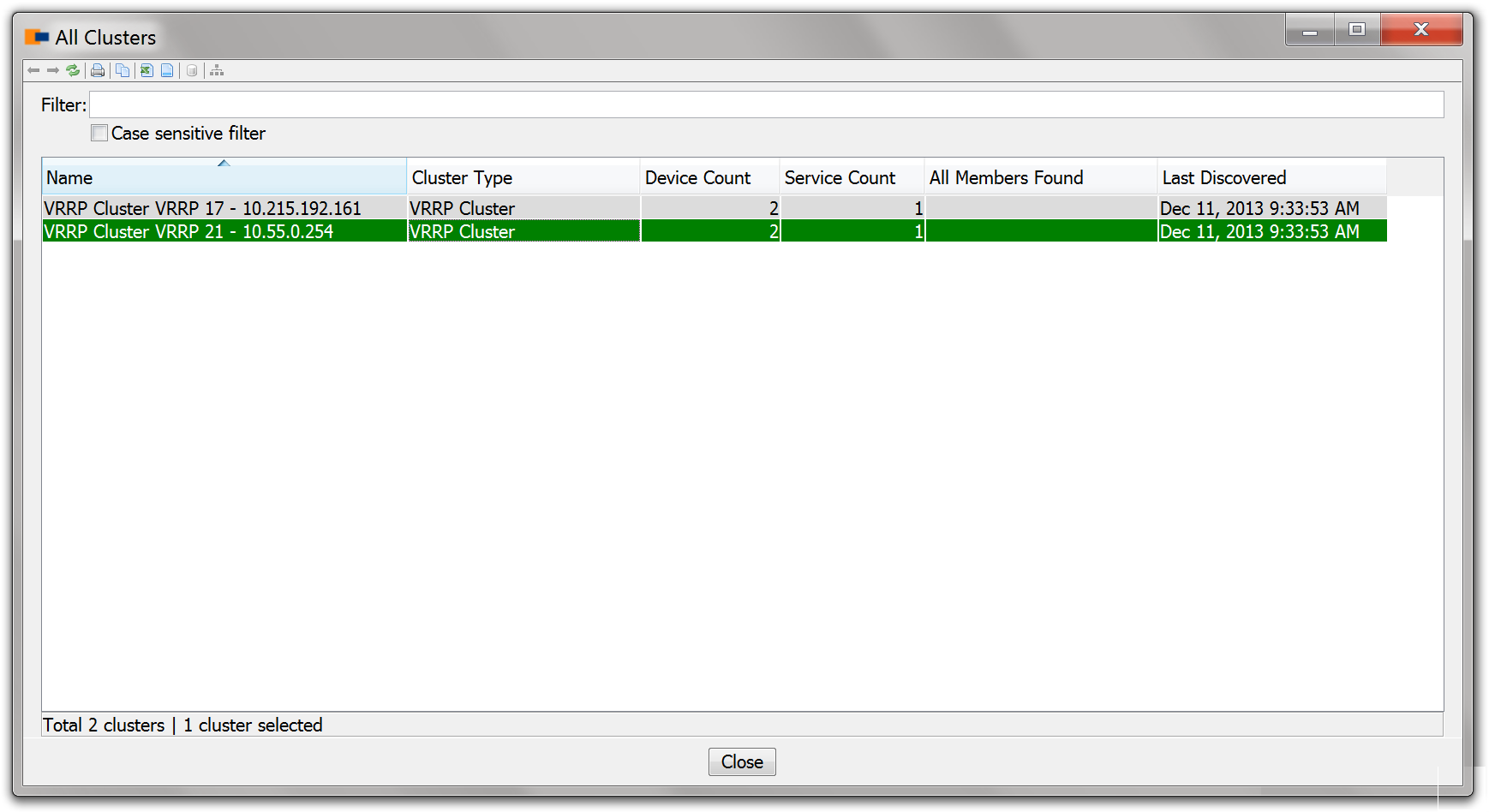
The following view from the original article shows a list of detected VRRP clusters. Each cluster contains the members that were found during discovery.
From a cluster overview to the participating devices
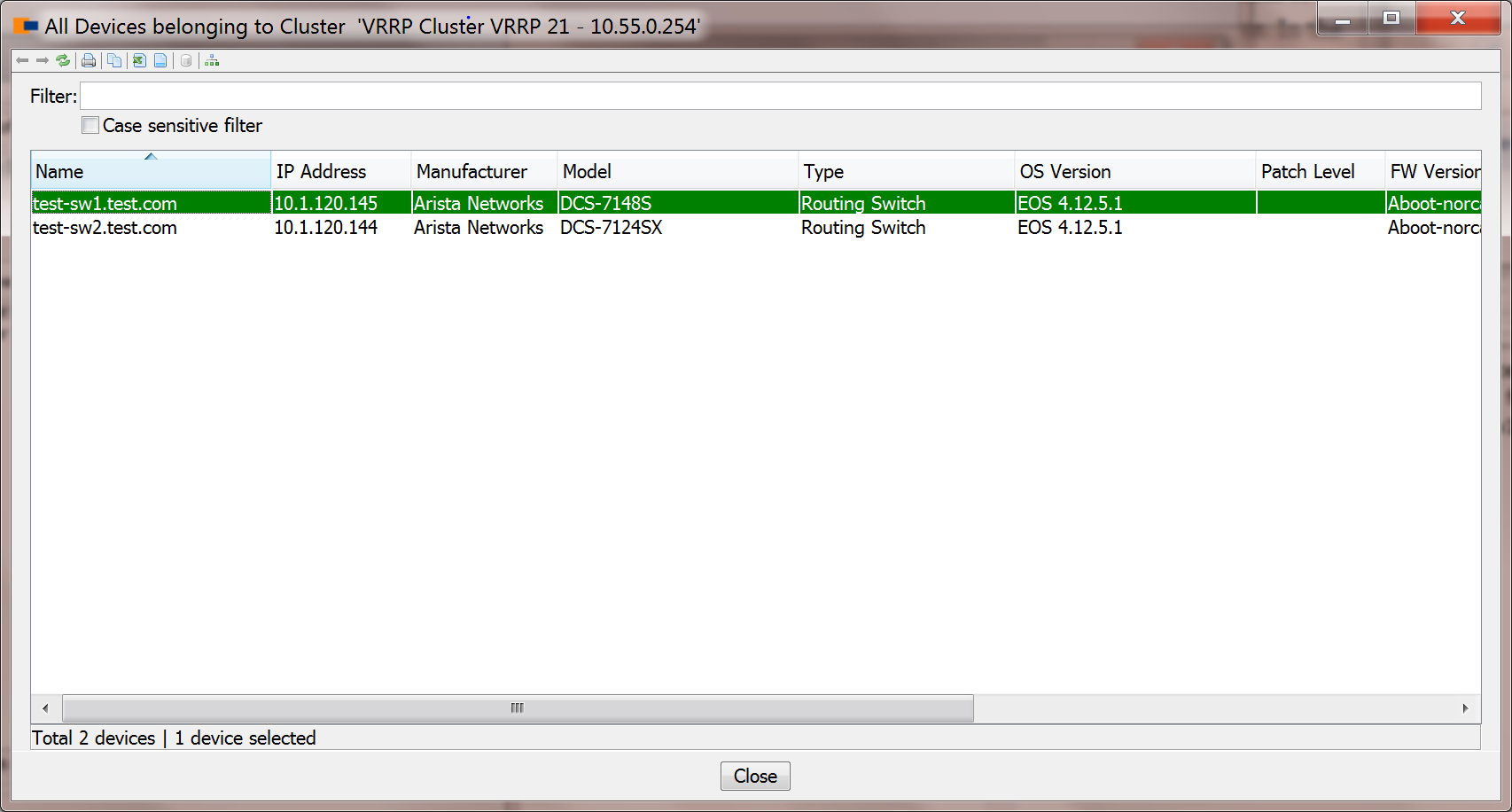
The next useful question is always: which physical devices are responsible for this virtual gateway? A cluster membership view answers that question directly. In the original example, two Arista switches were shown as members of the selected VRRP cluster.
This relationship is especially helpful when a network contains many Layer-3 devices or several similar redundancy groups. Instead of interpreting interface data one device at a time, you can begin with the service and follow it to the devices that implement it.
Preserve the interface-level evidence
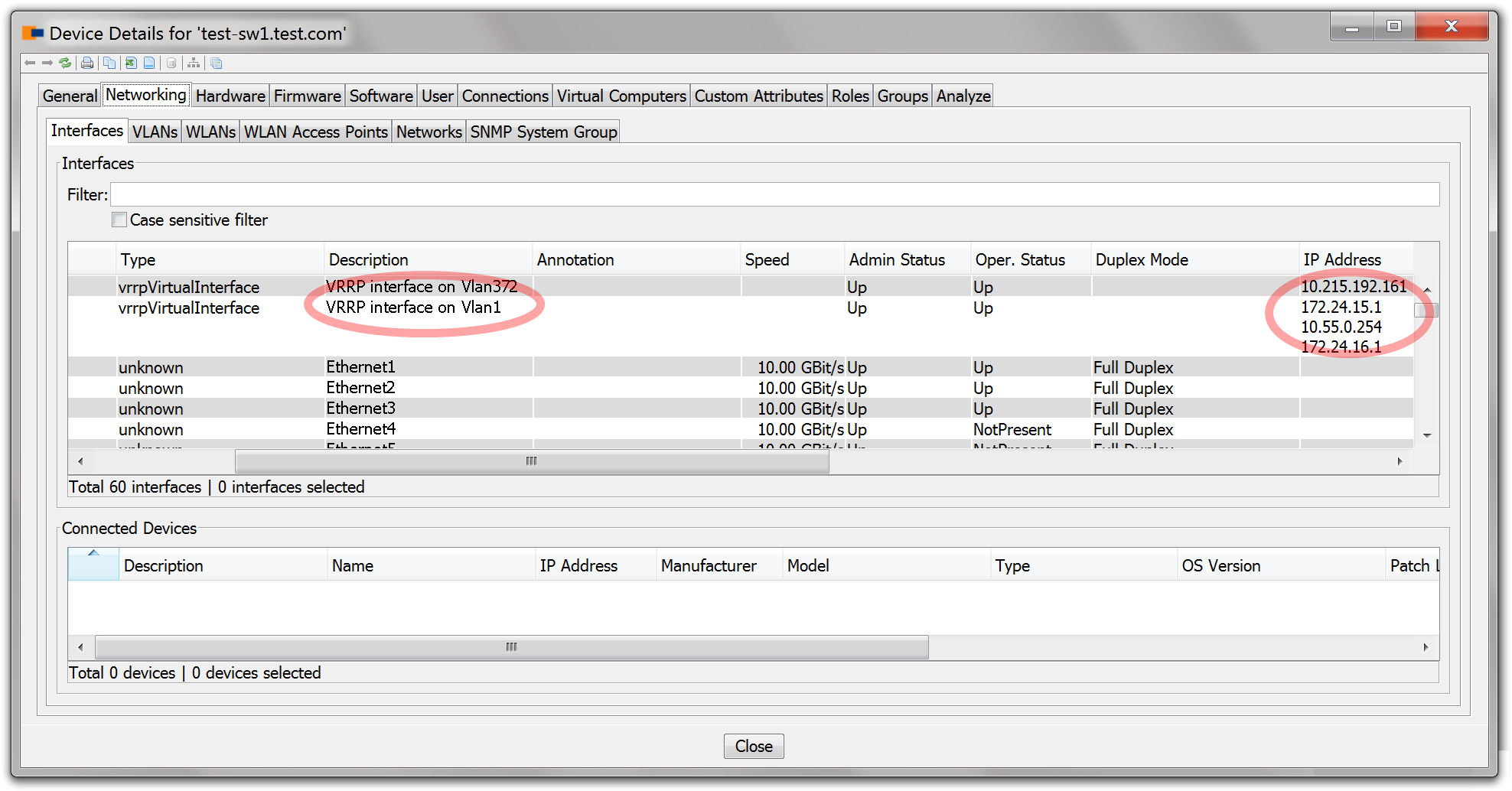
Cluster membership provides the high-level relationship. Interface information provides the supporting evidence. On a device, the relevant interface can show the VRRP addresses associated with the redundancy configuration. This is useful when you need to validate how the virtual service is attached to the network.
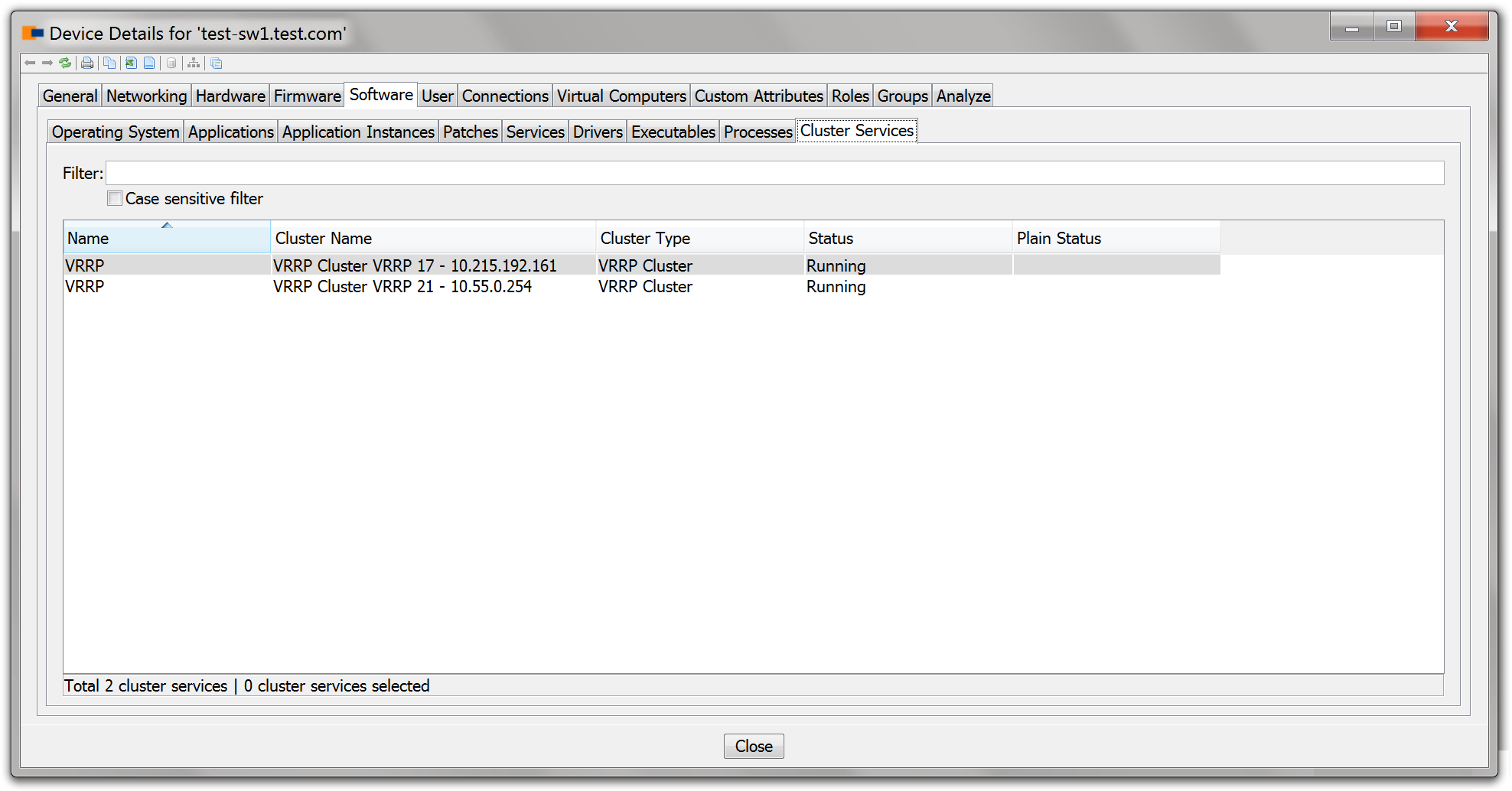
For a complete view, it is also useful to retain the discovered cluster service information for each participating device. That helps distinguish several services on the same switch or router and keeps logical roles connected to the right hardware records.
Practical benefits for network operations
Making VRRP and HSRP relationships visible supports several practical tasks. During a planned change, you can identify the other members that protect a gateway and verify that the change is being made in the right scope. During troubleshooting, the logical service gives you a straightforward starting point before you inspect individual devices. For documentation, the cluster relationship prevents a virtual IP address from being recorded as if it belonged to only one permanent physical device.
The same context also helps when inventory data is reused outside the network team. A CMDB, an IT documentation system, or a report can be more useful when it distinguishes a resilient service from the devices on which it runs. The result is a clearer, more reliable model of the environment and fewer assumptions during incident response. That is the kind of practical transparency that makes network work easier: you can see the relationship, understand it, and act on it with confidence.
To learn more about how JDisc Discovery documents network infrastructure, see the JDisc video tutorials or download JDisc Discovery to evaluate it in a representative network scope.
Frequently Asked Questions
These questions address the relationship between VRRP or HSRP and practical network inventory. They explain why virtual gateway services need separate documentation and how cluster-aware discovery supports everyday network operations.
VRRP is a standards-based virtual router redundancy protocol. HSRP is Cisco’s standby router protocol. Both use a group of devices to present a virtual default gateway and allow another member to take over when the active member is unavailable.
The virtual IP and MAC address represent a logical gateway service, while the routers or switches are the physical devices that provide it. Documenting both prevents the service from being confused with one permanently active device.
Yes. A device can provide more than one virtual router service. This is why it is useful to record the individual cluster services and their related interfaces, not only the device itself.
The protocol allows a backup group member to assume the forwarding role when the active member fails or becomes unavailable. Clients continue to use the same virtual default gateway.
Identify the relevant virtual service, its participating devices, the active and backup roles according to your operational procedures, and the interfaces involved. Follow your approved change process and validate the intended redundancy state afterward.
It brings the virtual gateway, its members, and supporting interface information into one context. That reduces the time needed to determine which devices should be investigated when a gateway-related issue occurs.
No. Discovery documents the observed infrastructure and relationships. Configuration management and change control remain essential for defining, approving, and maintaining the intended network design.